

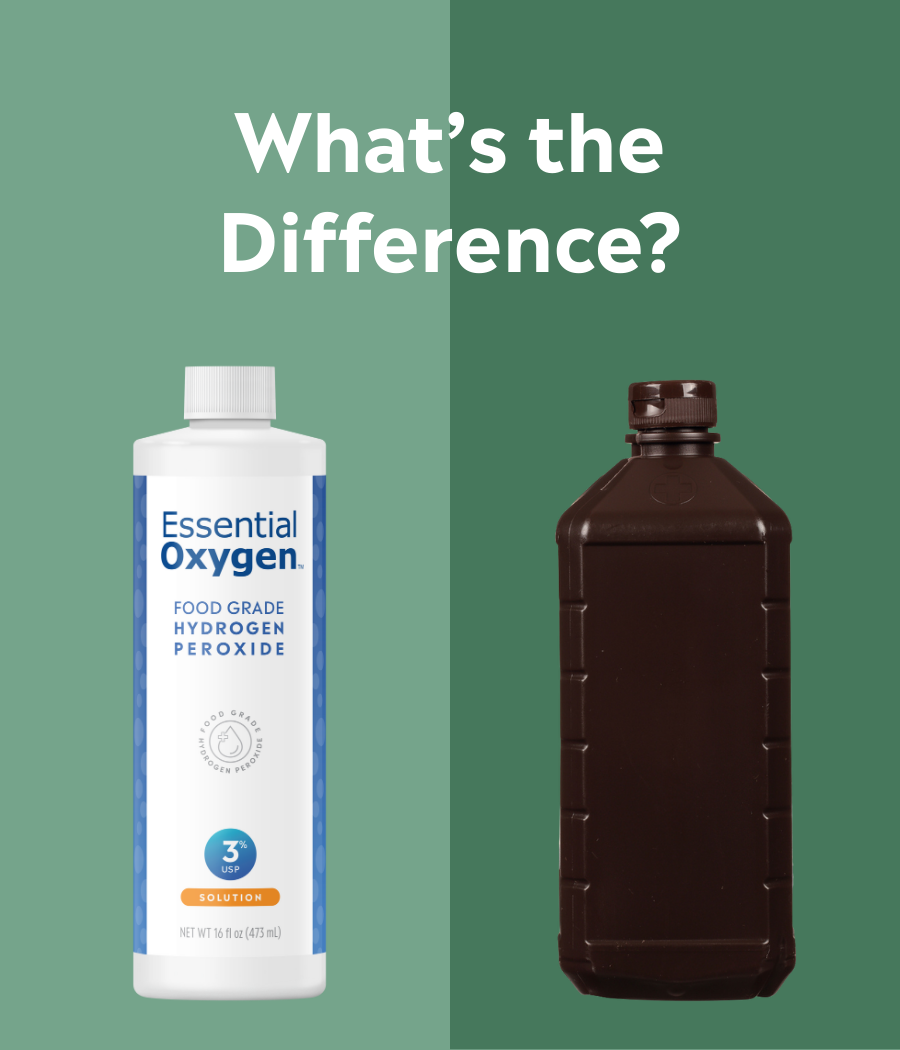
Why the Stabilizers Matter More Than the Percentage
Hydrogen peroxide is one of the most powerful natural oxidizers on Earth. It's produced by plants, animals, and even the human immune system as a defense mechanism. It breaks down into nothing but oxygen and water.
But here's what most people don't know:
Hydrogen peroxide cannot exist safely without stabilizers.
Without them, it decomposes rapidly, builds pressure, and can literally rupture its container.
So the real question isn't "Does this hydrogen peroxide contain stabilizers?" It's:
What stabilizers are used, and what is this solution allowed to touch?
This is where the difference between food grade hydrogen peroxide and the typical brown bottle becomes critical.
Why Hydrogen Peroxide Must Be Stabilized
Hydrogen peroxide (H₂O₂) is inherently unstable. Exposure to:
causes it to break down into oxygen and water. When that happens too quickly, pressure builds and the solution can foam, vent, or explode.
To prevent this, manufacturers add stabilizers that control the decomposition rate.
All hydrogen peroxide is stabilized.
There is no such thing as "unstabilized" hydrogen peroxide on the market.
The difference is what those stabilizers are made from.
The Brown Bottle: Industrial-Grade Stabilizers
The standard brown bottle hydrogen peroxide found in drugstores is formulated for industrial and pharmaceutical supply chains, not food contact.
These formulas typically contain:
These stabilizers are not food safe and are not approved for direct contact with consumables.
That's why brown bottle hydrogen peroxide is labeled:
It was never designed for:
It exists for:
Food Grade Hydrogen Peroxide: A Different Standard Entirely
Food grade hydrogen peroxide is manufactured under USP and FCC specifications. This means:
This is not cosmetic.
This is a regulatory distinction.
If a solution is used in food facilities, it must meet an entirely different purity and safety standard than household or industrial peroxide.
Why Hydrogen Peroxide Can Never Be "Organic"
This is another common misunderstanding.
Hydrogen peroxide is a mineral compound. It is not agricultural, not botanical, and not derived from carbon-based life.
Because of that: No hydrogen peroxide can be certified organic under any regulatory body.
If you ever see "organic hydrogen peroxide," that is a marketing phrase, not a certification.
What matters is:
What Makes Essential Oxygen Different
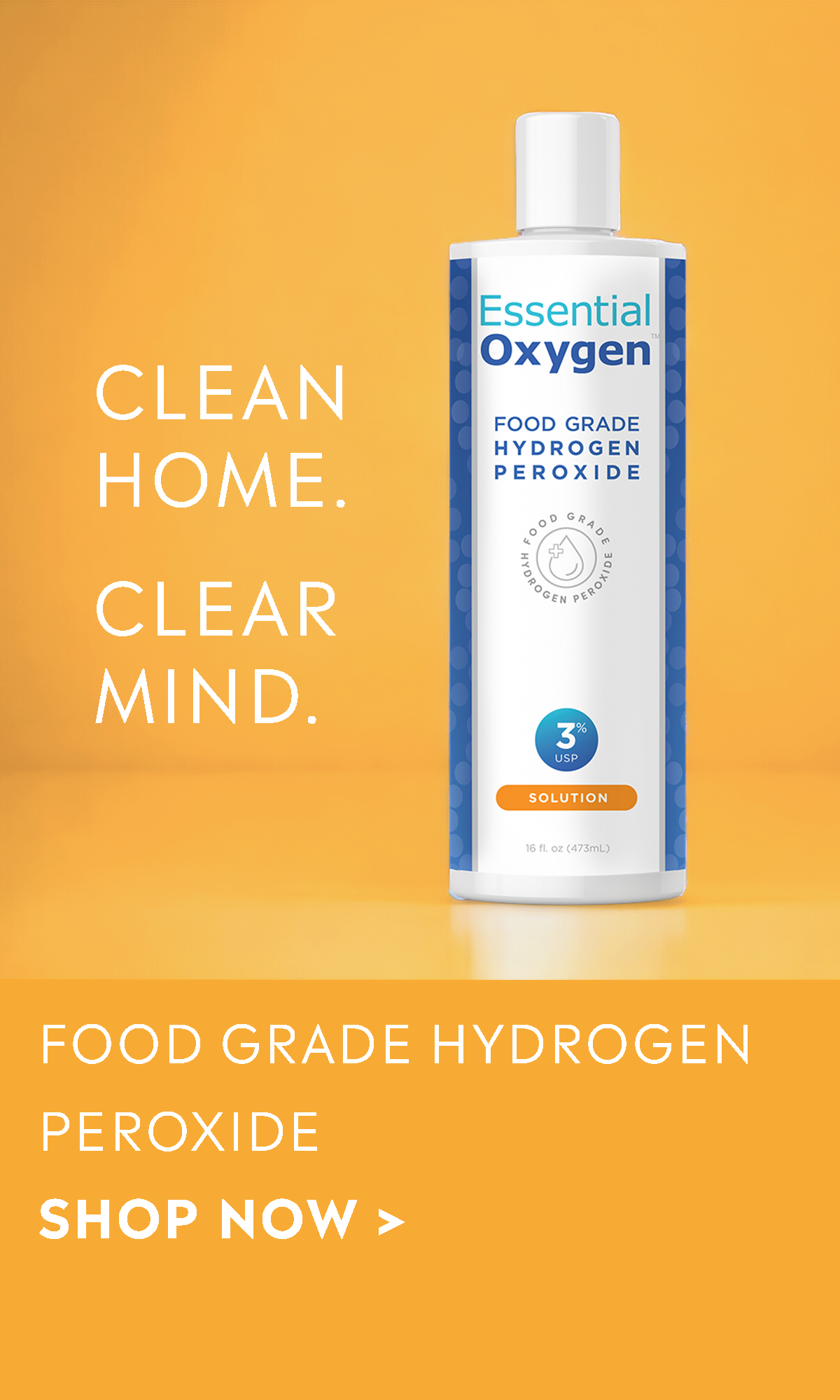
Essential Oxygen's Food Grade Hydrogen Peroxide is formulated specifically for:
It is:
This is the same class of hydrogen peroxide used in:
It is not the same substance as the brown bottle, even though the label says "3%".
Different stabilizer system.
Different regulatory class.
Different safety profile.
Formulated for food contact, oral care, and produce washing — the class of peroxide your kitchen actually needs.
Shop Food Grade H₂O₂The Bottom Line
Hydrogen peroxide is one of the cleanest oxidizers in nature. But the stabilizers define whether it belongs in your kitchen or only in your medicine cabinet.
|
Brown Bottle Peroxide
Industrial stabilizers
External use only
Not food safe
|
Food Grade Peroxide
Food-approved stabilizers
Tested for contaminants
Safe for food contact
|
If you're using hydrogen peroxide anywhere near what you eat, drink, breathe, or put in your mouth…