


If you've been using Essential Oxygen's food grade hydrogen peroxide for a while, you already know it's not a one-trick product. And if you're new here, you probably have questions. Lots of them. That's exactly why we built this guide: one place to send you (or your curious neighbor, or your skeptical mother-in-law) whenever a "wait, can I really use this for that?" question comes up.
1. What Is Food Grade Hydrogen Peroxide?
Here's the whole thing in one sentence: hydrogen peroxide (H₂O₂) is water (H₂O) with one extra oxygen atom tagged along for the ride.
That's it. That's the "power ingredient" everyone talks about. One extra atom of oxygen, ready to do work the moment it touches organic material like produce, soil, or a wine stain. When it does, it releases that oxygen and breaks back down into, you guessed it, water and oxygen. Nothing toxic left hanging around.
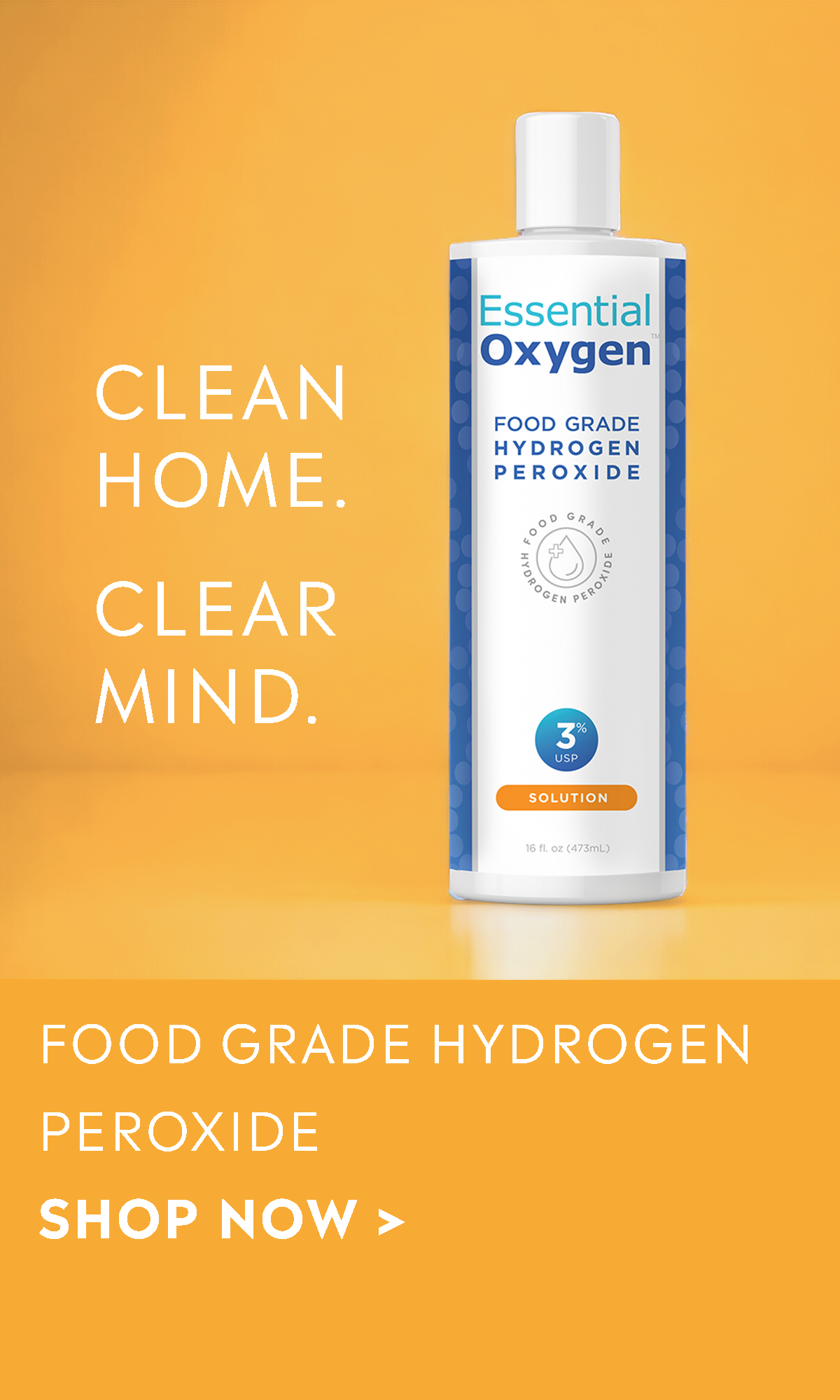
Essential Oxygen's food grade hydrogen peroxide is a 3% solution, made with deionized water and food grade hydrogen peroxide. It's the same simple molecule nature has been using in rainwater and rivers for a very long time, just concentrated to a level that's actually useful around your home.
The reaction, if you're a chemistry-curious person (we love you):
Hydrogen peroxide breaks into water and oxygen. That's the whole story.
2. Food Grade vs. What's Usually on the Drugstore Shelf
Let's clear up a common point of confusion: all hydrogen peroxide contains stabilizers, including ours. Stabilizers are what keep the formula from breaking down before you get to use it. The real question isn't "does it have stabilizers," it's "what kind, and what are they formulated for."
Essential Oxygen's food grade hydrogen peroxide uses food grade stabilizers, formulated specifically for use around food, on skin, and throughout your home. That's a meaningfully different formulation than a general-purpose bottle made for the first aid aisle, which isn't designed with food contact or produce washing in mind.
| Essential Oxygen FGHP | Typical Retail 3% H₂O₂ | |
|---|---|---|
| Concentration | 3% (consumer-ready) | 3% |
| Stabilizers | Food grade, formulated for food-contact and personal care use | Varies by manufacturer; formulated for general household/first-aid use |
| Safe around food? | Yes, at 3% and properly diluted | Not recommended |
| Safe on skin? | Yes, for most people at 3% | Follow manufacturer directions |
| Residue after use | Breaks down to water and oxygen | Varies by formulation |
We're not here to trash-talk what's in your medicine cabinet. We just built ours for a different job: your kitchen, your garden, your laundry room, and everywhere in between.
3. Why Does It Bubble? (The Science, Made Simple)
You spray it on a strawberry and it starts fizzing like it's auditioning for a science fair. Totally normal, and actually kind of satisfying to watch. Here's what's happening:
Catalase, the tiny cleanup crew. Catalase is an enzyme found in virtually every living thing, plants, produce, soil microbes, even your own cells. When hydrogen peroxide meets catalase, it triggers a rapid reaction that breaks the H₂O₂ into water and oxygen gas. The more biological material present (and the fresher it is), the more dramatic the bubbles.
Oxidation, the actual workhorse. Hydrogen peroxide is an oxidizing agent, which means it chemically breaks apart organic compounds sitting on a surface. Residue, film, and organic debris all get worked on to varying degrees.
Put plainly: when hydrogen peroxide contacts organic material, it breaks down into water and oxygen. The bubbling you see is oxygen being released during oxidation, a visible sign the formula is working.
4. Washing Produce, Nuts, Seeds & Grains
This is where most people start, and for good reason. Running water rinses off some surface dust and debris, but it doesn't oxidize residue the way food grade hydrogen peroxide can. The oxidizing action goes to work on the surface of produce, breaking down and loosening what plain water leaves behind, and it may help reduce surface bacteria on produce (hydrogen peroxide has FDA-recognized GRAS status for certain specific, defined food-contact uses). When it's done, it disappears into water and oxygen. No soapy taste, no film, no lingering anything.
How to use it, by category:
| Use | Dilution (3% FGHP) | Time | Rinse? | Notes |
|---|---|---|---|---|
| Fruits & vegetables (soak) | 1:3 FGHP to water | 10 min | Yes, required | Standard soak for most produce |
| Berries (delicate, like raspberries & blackberries) | 1:3 FGHP to water | 5 min max | Yes, required | Longer soaking causes softening |
| Produce (spray method) | 1:1 FGHP to water | 1 to 2 min, then rinse | Yes | Quick option for hard-surface produce |
| Mushrooms | 1:1 FGHP to water | Spray + 1 to 2 min | Yes | Spray and rinse works better than soaking, since mushrooms are porous |
| Fresh herbs (delicate leaves) | 1:1 FGHP to water | Spray only, 1 min | Yes | Spray method preferred over soaking |
| Nuts (surface clean) | 1:3 FGHP to water | 2 to 3 min max | Yes, before eating | Don't over-soak, this is a surface clean, not a nutritional soak |
| Seeds | 1:10 FGHP to water | 1 to 2 min | Yes | Dry completely after rinsing |
| Grains | 1:10 FGHP to water | Quick swirl, drain, don't soak | Yes, cold water | Dry completely. Skip this one for rice. |
5. Household Cleaning & Stain Removal
At 3%, food grade hydrogen peroxide is an effective alternative to bleach for surfaces, laundry, and stubborn stains. It oxidizes what it touches, then quietly breaks down into water and oxygen. No harsh fumes, no lingering residue to wipe up later.
6. Plant & Garden Use
Hydrogen peroxide occurs naturally in rainwater, just at far lower concentrations than a diluted FGHP solution. Using it in the garden is inspired by that natural process: delivering a little extra oxygen to the root zone and supporting overall plant health.
What it can help with:
How to use it:
| Application | Dilution (3% FGHP) | Frequency | Method |
|---|---|---|---|
| Root oxygenation (maintenance) | 1 to 2 tbsp per gallon of water | Every other watering | Water soil normally |
| Root rot support | 1:3 FGHP to water, as a drench | 2 to 3 times, spaced 2 to 3 days apart | Pour through soil; repotting in fresh soil helps too |
| Moldy soil or fungal concerns | 1:1 FGHP to water | 2 to 3 treatments | Apply to affected area; spot test delicate plants first |
| Fungus gnat management | 1:4 FGHP to water | Weekly for 2 to 3 weeks | Water until it drains through |
| Seed soak (pre-germination) | 1 tbsp per cup of water | Once, before planting | Soak 1 to 4 hours, then rinse |
| Leaf surface care | 1:3 FGHP to water, diluted spray | As needed | Spray, then wipe with a dry cloth; may support photosynthesis by clearing surface debris |
7. Quick Dilution Cheat Sheet
Save this one for the fridge.
| Use Case | Dilution | Time |
|---|---|---|
| Fruits & veggies (soak) | 1:3 FGHP:water | 10 min |
| Berries (delicate) | 1:3 FGHP:water | 5 min max |
| Produce (spray) | 1:1 FGHP:water | 1 to 2 min |
| Mushrooms | 1:1 FGHP:water | Spray, 1 to 2 min |
| Fresh herbs | 1:1 FGHP:water | Spray, 1 min |
| Nuts (surface clean) | 1:3 FGHP:water | 2 to 3 min max |
| Seeds | 1:10 FGHP:water | 1 to 2 min |
| Grains (not rice) | 1:10 FGHP:water | Quick swirl, no soak |
| Root oxygenation | 1 to 2 tbsp/gallon | Every other watering |
| Moldy/fungal soil | 1:1 FGHP:water | 2 to 3 treatments |
| Fungus gnats | 1:4 FGHP:water | Weekly x 2 to 3 weeks |
| Seed soak | 1 tbsp/cup water | 1 to 4 hours |
| Leaf surface care | 1:3 FGHP:water | Spray + wipe |
| Countertops/surfaces | Full 3%, spray | 1 to 2 min |
| Grout/mold | Full 3% or baking soda paste | 10 min |
| Laundry whitening | 1 cup per load | Full wash cycle |
| Wine/organic stains | Full 3% or 1:1 | 5 to 10 min |
8. Safety Basics
A few ground rules that apply across every use above:
9. Still Have Questions?
If your question isn't covered above, that just means we haven't heard it yet. Send it our way and we'll get you an answer, and probably add it to this guide for the next person wondering the exact same thing.
Oxygen really is nature's way to clean. We just bottled it.
Ask Us Your Question