Oxygen Is Nature's Way To Clean™
Here is something most people don't know about eucalyptus: almost nothing on earth can consume it. The leaves are so concentrated with their active compound, eucalyptol, that the plant essentially uses it as a force field against the outside world. Koalas had to evolve a specialized digestive system just to handle it. A handful of possums and insects managed to adapt and everything else stays away.
That instinct of the plant to protect itself is exactly why it belongs in your mouthwash.
The active compound in eucalyptus is called eucalyptol, also known as 1,8-cineole, and it makes up more than 70% of eucalyptus oil by volume.[1] Research shows eucalyptus oil may help inhibit bacteria such as Streptococcus mutans and Porphyromonas gingivalis, both of which are associated with plaque buildup and gum concerns.[2] Those are not abstract bacteria. Streptococcus mutans is one of the primary drivers of tooth decay. Porphyromonas gingivalis is closely linked to gum disease. Eucalyptol has been studied specifically for its potential to interfere with both.[3]
A review published in dental research found that eucalyptol shows activity against a wide range of microorganisms connected to oral disease. Translation: it does not target just one thing. It shows up broadly.[4]
Dentists have known about eucalyptol for a long time. It was presented to the Massachusetts Dental Society in 1882 as a meaningful ingredient in oral care.[5] By the early 1900s it was being used in hospitals for its antiseptic properties, with its medicinal use peaking during the 1918 flu pandemic.[6] We are talking about a botanical with more than a century of serious, documented attention from practitioners who care about results.
Indigenous Australians had been using it for far longer than that.
What Eucalyptus Brings to Your Oral Care Routine
It works on plaque where it starts. Eucalyptol has been studied for its potential to help disrupt the bacteria that contribute to plaque formation.
[2] A cleaner mouth starts with a less hospitable environment for the microorganisms that cause problems in the first place.
It supports a comfortable gum line. The same properties that make eucalyptol such a studied compound in oral care also contribute to a soothing sensation along the gum tissue.
[7] Your gum line is where a lot of the real action happens, and eucalyptus shows up there.
It freshens because it works, not the other way around. That clean, cool sensation after you rinse with BR Mouthwash is eucalyptol doing its thing. Consider the freshness a side effect of something more important going on.
It has a 140-year track record in dentistry. We did not choose eucalyptus because it smells nice. We chose it because practitioners have been paying close attention to it since 1882 and keep arriving at the same conclusion.
[5]
Where You Will Find It
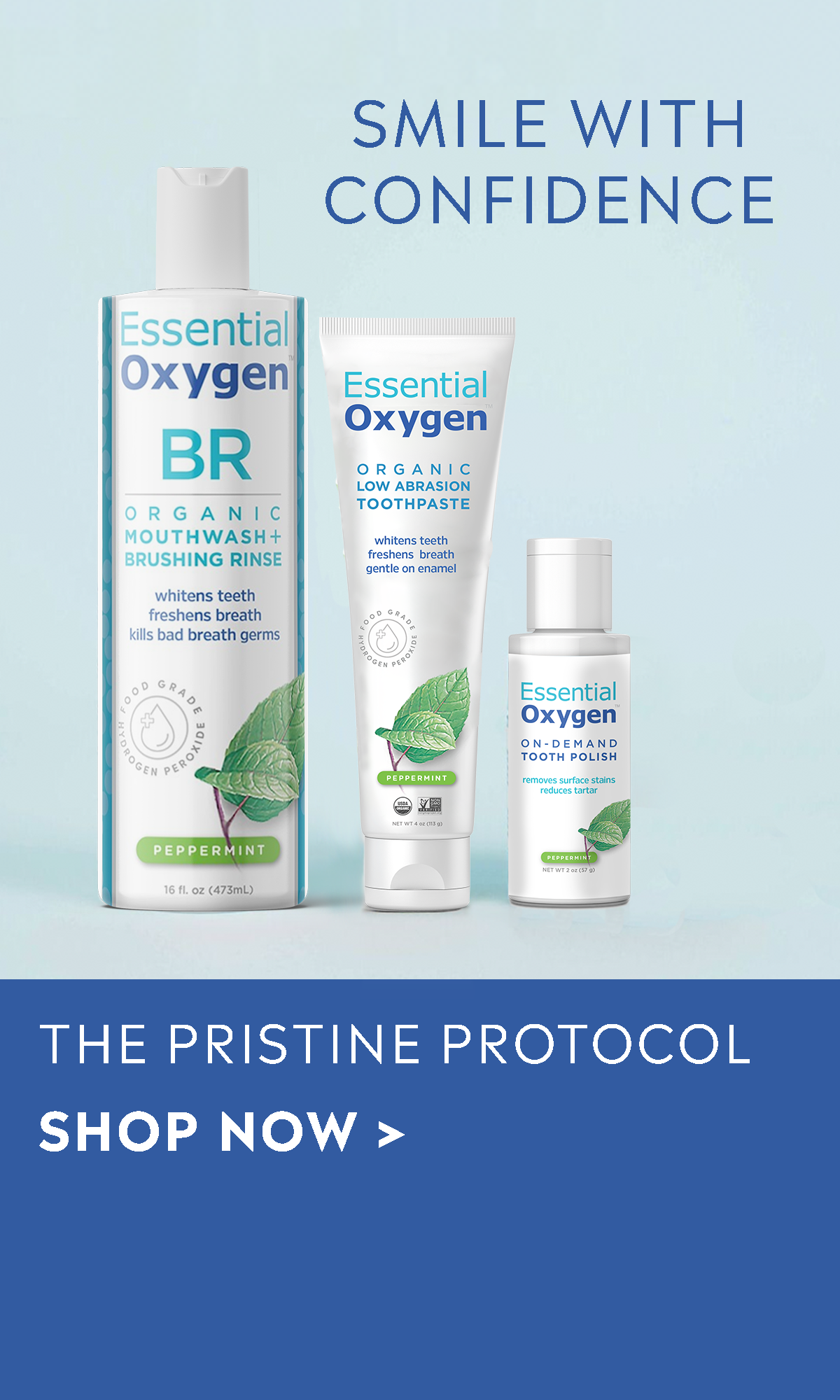
Eucalyptus is an ingredient across all three steps of The Pristine Protocol in the BR Organic Mouthwash + Brushing Rinse, the Organic Low Abrasion Toothpaste, and the On-Demand Tooth Polish. Every step of your oral care routine carries it.
The Pristine Protocol
Eucalyptus, in every step
From rinse to brush to polish, eucalyptol is working the whole way through your routine.
References
1.
Eucalyptol (1,8-cineole) is the principal constituent of Eucalyptus globulus oil, which consists of not less than 70% 1,8-cineole. Cosmetic Ingredient Review, Safety Assessment of Eucalyptus globulus-Derived Ingredients (2017), cir-safety.org; and Ma et al., Frontiers in Pharmacology (2020), which reports 1,8-cineole content of more than 70% in E. globulus leaves. ncbi.nlm.nih.gov
2.
Eucalyptus globulus leaf and fruit essential oils showed antibacterial activity against Streptococcus mutans (MIC 0.06%) and Porphyromonas gingivalis (MIC 0.025%), inhibited biofilm formation, and reduced the adhesion of S. mutans to a hydroxyapatite (tooth-surface) model. Eucalyptus globulus Labill. Essential Oil Effect on the Attachment of Oral Bacteria to Hydroxyapatite and Biofilm Formation, Bentham Science. benthamscience.com
3.
Eucalyptus oil significantly reduced biofilm formation by Streptococcus mutans in vitro, supporting its study as an anti-caries agent. "Effect of eucalyptus oil on Streptococcus mutans and Enterococcus faecalis growth," BDJ Open (Nature), 2023. nature.com
4.
A dental scoping review of thymol, menthol, and eucalyptol concluded these terpenes can be considered broad-spectrum antimicrobial substances active against microorganisms linked to oral disease (including Aggregatibacter actinomycetemcomitans, Candida albicans, Enterococcus faecalis, and Streptococcus mutans). Martínez-Pabón MC, Ortega-Cuadros M. "Thymol, menthol and eucalyptol as agents for microbiological control in the oral cavity: A scoping review." Revista Colombiana de Ciencias Químico-Farmacéuticas, 2020;49(1):44-69. scielo.org.co
5.
Eucalyptus and eucalyptol were the subject of a paper read before the Massachusetts Dental Society on June 8, 1882 (Dr. Geo. L. Parmele), discussing the therapeutic properties of eucalyptus, including its effect on saliva and mucous membranes. Archived primary source. ncbi.nlm.nih.gov
6.
Eucalyptus oil was used as a surgical antiseptic beginning in the 1880s and in 19th-century hospitals, and its medicinal use is commonly described as peaking during the 1918 influenza pandemic. Complementary and Alternative Medicine review of Eucalyptus. sbrmc.adam.com
7.
Eucalyptol (1,8-cineole) has well-documented anti-inflammatory activity, the basis for its soothing effect on soft tissue. "1,8-cineole (eucalyptol): A versatile phytochemical with therapeutic applications across multiple diseases," Biomedicine & Pharmacotherapy, 2023. sciencedirect.com