


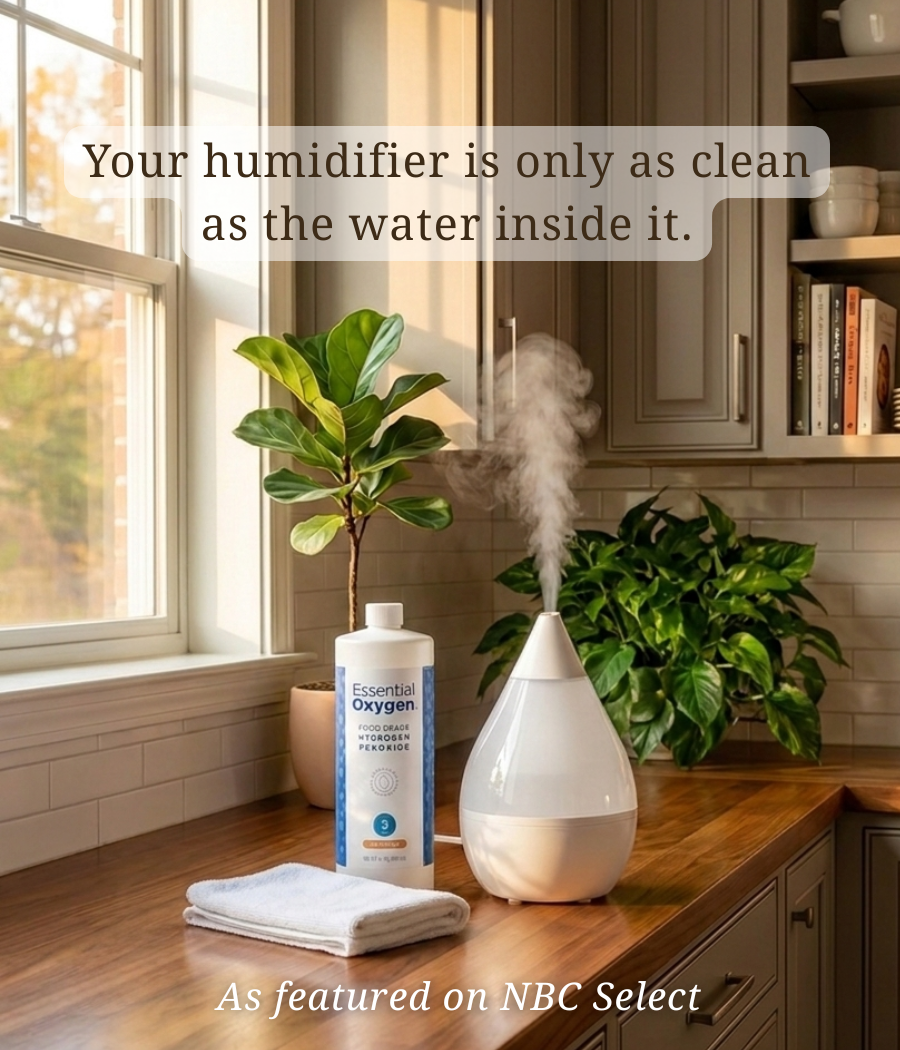
If you've ever popped the lid on a humidifier that's been running all week and caught a stale smell — or spotted a slick film along the bottom of the tank — you already know why cleaning it matters.
A humidifier adds welcome moisture to dry indoor air, but it's also a warm, still pool of water. That's exactly the kind of spot where mineral scale, residue, and even mold like to set up shop. The good news: keeping one clean is genuinely simple, and there's a good chance you already have what you need under the sink.
We were glad to see it on the list, because hydrogen peroxide has been a quiet workhorse in our own homes for years.
Why cleaning your humidifier matters
Stagnant water with little airflow is a recipe for buildup. Over time, minerals from your tap water leave chalky scale on the tank and misting parts, while the damp, enclosed environment can invite mold and bacteria. Since a humidifier's whole job is to release that water back into the air you breathe, anything growing inside it doesn't stay inside it.
Cleaning regularly keeps things working the way they should. A well-maintained humidifier puts out a fresher mist, resists mineral buildup that can clog the works, and runs more efficiently — which also means you're not constantly wondering what's drifting into the room.
Why some people reach for hydrogen peroxide over vinegar or dish soap
Most humidifier manuals list a few cleaning options — usually white vinegar, dish soap, or hydrogen peroxide. Any of them can handle buildup when used correctly, so a lot of this comes down to preference. Here's where peroxide tends to win people over.
No lingering vinegar smell
Vinegar cuts through mineral scale well, but the sharp odor can hang around and usually takes extra rinsing to clear. Hydrogen peroxide leaves no scent behind.
No soap film
Dish soap can leave residue or suds if you don't rinse thoroughly. Hydrogen peroxide breaks down into water and oxygen, so there's nothing left to rinse out — no soaps, no fragrance.
One simple ingredient
Food Grade Hydrogen Peroxide is just hydrogen peroxide, purified water, and food-grade stabilizers. If you like keeping your cleaning routine to as few ingredients as possible, it does double duty all over the house.
Fragrance-free
For homes that lean away from scented sprays, peroxide is about as no-frills as it gets.
Bottom line: vinegar, dish soap, or hydrogen peroxide will all get the job done. What matters most is sticking to a regular routine.
How to clean a humidifier with Food Grade Hydrogen Peroxide
A quick note on why food grade specifically: most brown-bottle peroxide relies on industrial-grade stabilizers. Those stabilizers are considered safe and do an important job keeping the product shelf-stable, but if you'd rather keep things simple around an appliance that mists into the air, Food Grade Hydrogen Peroxide uses food-grade ingredients and stabilizers instead.
Manufacturers differ on whether to run a solution through the tank or just wipe parts down, so always check your manual first. NBC's experts, for instance, suggest applying peroxide with a cloth or spray bottle. If your manufacturer clears a soak, here's a straightforward routine.
A few habits that keep it fresher between deep cleans
- Empty and refill daily. Don't let water sit in the tank between sessions. A quick rinse and fresh fill each day cuts down on mineral buildup and keeps the unit running well.
- Use distilled water when you can. Distilled water means fewer minerals, which means less scale and less of that white dust tap water can leave on furniture. It can also stretch the time between deep cleans.
- Deep clean on a schedule. Depending on how often you run it, do a thorough clean weekly or monthly. Let your cleaning solution soak as directed, rinse well, and dry everything fully before reassembling.
- Replace filters on time. If your humidifier uses a filter, swap it at the interval the manufacturer recommends. A fresh filter keeps airflow and performance where they should be.
- Dry it out before storing. Putting it away for the season? Empty all the water and let every part dry completely first. That's what prevents musty odors and buildup while it sits.
- Watch for the warning signs. Visible residue, discoloration, weaker mist, or an off smell all mean it's time to clean — even if you did it recently.
One honest ingredient, all over the house
Caring for your home doesn't need a cabinet full of single-use sprays. Whether you're wiping down counters, rinsing produce, or freshening up a humidifier, Food Grade Hydrogen Peroxide covers a lot of ground — and it's why we were happy to see it earn a spot on NBC Select's list.
Frequently asked questions
How often should you clean a humidifier?
Empty leftover water and rinse the tank daily. For a deeper clean, aim for once a week with regular use, or at least monthly if you only run it occasionally. Always follow your manufacturer's instructions.
Can you use hydrogen peroxide to clean a humidifier?
Yes. A food-grade hydrogen peroxide is safe to use around the inside of a humidifier. Depending on your manufacturer's guidance, apply it with a cloth or spray bottle, or use it as a soak.
Is hydrogen peroxide better than vinegar for cleaning a humidifier?
Both work. Many people prefer hydrogen peroxide because it leaves no lingering smell and breaks down into water and oxygen, so there's no vinegar odor or soap residue to rinse away.
What kind of hydrogen peroxide should I use?
Many people choose food grade hydrogen peroxide for appliances that mist into the air, since it uses food-grade ingredients and stabilizers rather than the industrial-grade stabilizers found in conventional brown-bottle products.