




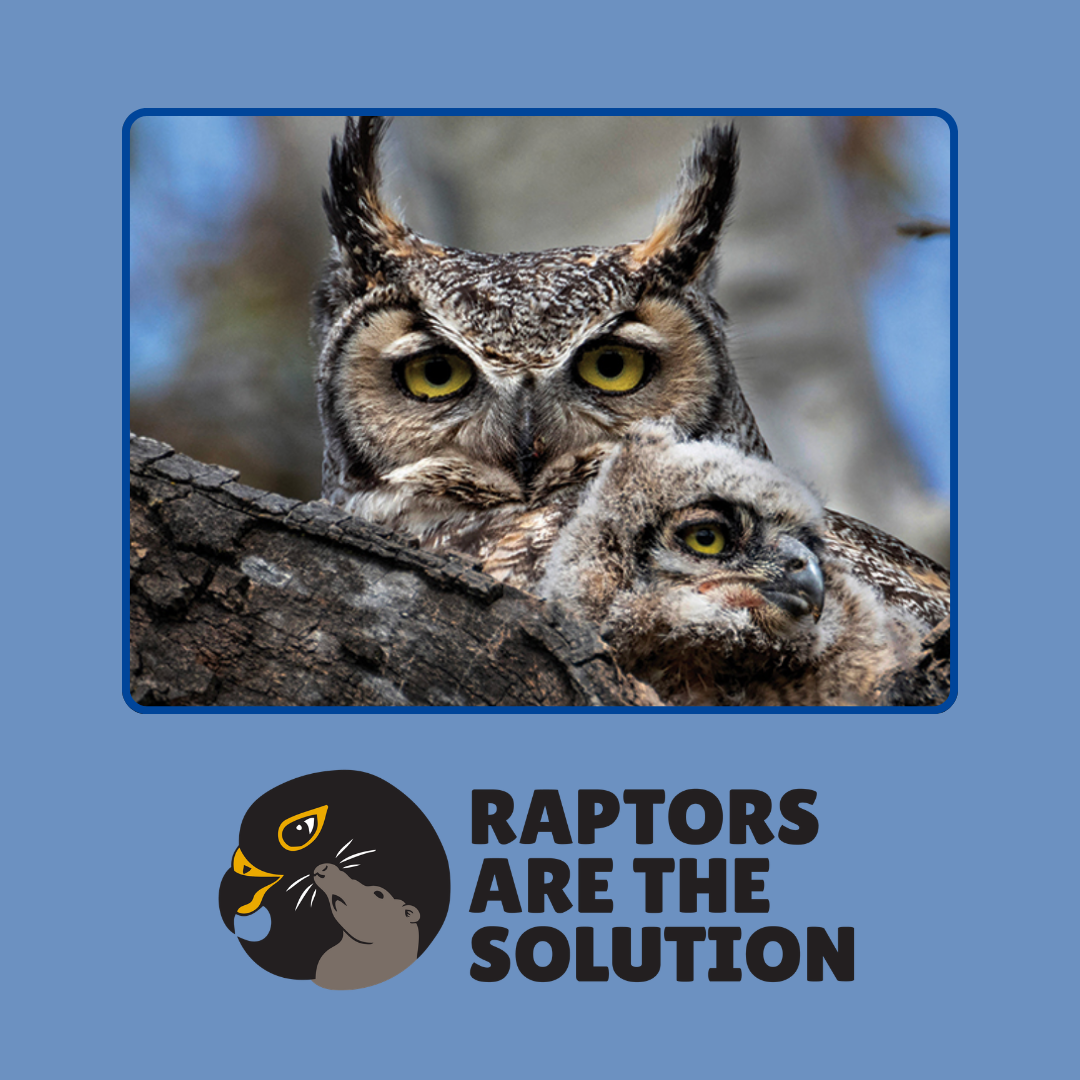
Raptors Are The Solution helped pass the strongest rodenticide laws in the country. Now the agency meant to enforce those laws is trying to walk them back.
In 2007, a neighbor walked up to Lisa Owens Viani's front door in Berkeley carrying a black garbage bag. Inside were two dead Cooper's hawks she had been watching fledge from a nest down the street. Necropsies at UC Davis confirmed the cause: rat poison, ingested by the rodents the hawks had been eating.
Four years later, Owens Viani founded Raptors Are The Solution, known as RATS. Fifteen years after that, this small Berkeley nonprofit has been the engine behind every major state level victory against anticoagulant rodenticides in the United States. And right now it is fighting to keep those wins from being quietly rolled back.
"We are never going to completely eradicate rats. And if poison really worked, they would be eradicated already."
Lisa Owens Viani, founder and director of Raptors Are The Solution
Why rat poison is a wildlife crisis
Anticoagulant rodenticides, or ARs, kill rats by blocking the body's ability to clot blood. Rodents die slowly from internal bleeding, which makes them easy prey for any hawk, owl, coyote, bobcat, fox, fisher, or family dog that finds one. The poison moves up the food chain.
Stella McMillin, senior environmental scientist at the California Department of Fish and Wildlife and one of the country's leading researchers on secondary poisoning, has documented the scale of the problem for more than a decade.
"Animals will bleed to death internally after eating these pesticides. It is not just the animal that has gotten into the bait itself, but the animals that eat the rodents that got into the bait."
Stella McMillin, Senior Environmental Scientist, California Department of Fish and Wildlife
The Exposure Data
- 71.9 percent of California wildlife tested by the state Department of Fish and Wildlife in 2023 had been exposed to anticoagulant rodenticides.
- More than 90 percent of mountain lion carcasses collected by CDFW in 2016 and 2017 tested positive for anticoagulant rodenticides. Most had been exposed to three or more different ones.
- 40,808 human rodenticide poisonings were reported to the CDC between 2017 and 2021, the majority in children under five.
The legislative streak
RATS sued the California Department of Pesticide Regulation in 2018 over its handling of second generation anticoagulants. That lawsuit forced a reevaluation and opened the door for three bills in five years.
"There are so many other animals that don't have names or fame that have been victims. If we want to have these animals living among us, we need to make better choices."
Lisa Owens Viani in Audubon, 2025
What the veterinarians see
Owens Viani has described what diagnostics programs at wildlife hospitals like WildCare in San Rafael find.
"We tested a great horned owl found in a dumpster in a San Francisco park. The owl came back positive for several different anticoagulant rat poisons and had a body cavity full of blood. The owl bled to death internally."
Lisa Owens Viani, Raptors Are The Solution
Where the fight is moving in 2026
California's playbook is now being copied. Vermont H.758, introduced January 2026 by Representative Lawrence Satcowitz, would prohibit the use and sale of all anticoagulant rodenticides and add a ban on nonanticoagulant products. Massachusetts has a similar MSPCA backed bill in its 2026 session. A New York bill, S.0651, would phase out consumer retail sale of first generation rodenticides by March 2026 and second generation by January 2027. Connecticut classified SGARs as Restricted Use Pesticides effective January 1, 2026.
Why California is suddenly going backward
In September 2025, the same agency RATS sued in 2018 proposed a new set of rodenticide rules. On paper, the rules add training requirements and limit how long bait can be deployed. In practice, they expand the list of locations where anticoagulant rodenticides can be legally used, allow some unlicensed individuals to purchase and apply them, and offer no new evidence that wildlife exposure has gone down. Under the Poison Free Wildlife Act, the state cannot lift the moratorium without that evidence. The most recent data still shows exposure in 71.9 percent of tested wildlife.
RATS and the Center for Biological Diversity submitted joint technical comments to DPR in November 2025 calling the proposal a circumvention of the legislature.
What the DPR rollback would do
- Expand legal AR use into grocery stores, food processing facilities, agricultural commodity storage, and other commercial sites.
- Allow some unlicensed individuals to purchase and apply rodenticides the legislature designated as Restricted Use Materials.
- Move forward without new evidence that wildlife exposure has declined, despite the legal requirement to show a statistically significant reduction first.
What people can do
Rodenticides are not a problem residents have to wait on legislators to solve. There are immediate steps anyone can take. Please visit www.rodentsarethesolution.com and check out their free resource material, including door hangers that kids can color to educate neighbors that rat poison is wildlife poison. Check out these steps as well:
- Refuse the seven anticoagulant compounds. Brodifacoum, bromadiolone, difethialone, difenacoum, diphacinone, chlorophacinone, and warfarin.
- Practice exclusion first. Most rat problems begin with food and entry points, not lack of poison. Seal gaps, pick fallen fruit, secure compost, bring pet food indoors.
- Use snap or electronic traps when control is needed.
- Install a barn owl nest box. One barn owl family can consume up to 3,000 rodents in a year. The California Raptor Center and Hungry Owl Project publish free plans.
- Ask your pest control company what is in their bait stations. If they will not say, find a different company. RATS maintains a directory of preferred providers.
- Report violations. In California, photograph any labeled product containing the seven banned compounds and contact your county Agricultural Commissioner.
- Track and testify on bills. Vermont H.758, the Massachusetts MSPCA bill, and New York S.0651 are all in active sessions.
How a tiny nonprofit moves a state legislature
RATS is not a standalone 501(c)(3). It runs as a fiscally sponsored project of Earth Island Institute, a Berkeley based environmental nonprofit rated four stars by Charity Navigator. That structure keeps overhead low and puts donor dollars close to the work.
The operation has four arms. Public education campaigns put hawks and owls on billboards and bus ads across the Bay Area with slogans like "Don't Poison My Dinner" and "Rat Poisons Kill More than Rats." A network of seven local chapters runs neighborhood organizing in cities from Marin to Los Angeles. The science arm partners with wildlife rehabilitation hospitals, university labs, and state scientists to keep the exposure data flowing. And the legal arm files the lawsuits and technical comments that hold agencies and manufacturers accountable.
That fourth arm is where the leverage shows up. The 2018 lawsuit against California DPR triggered the regulatory process the legislature later wrote three bills around. In January 2023, RATS sued Bell Laboratories, one of the largest rat poison manufacturers in the country, for marketing its rodenticide products as "sustainable" and "earth friendly." The case is a textbook greenwashing complaint, filed against a company that sells products designed to kill the species the marketing implies it protects.
The chapter network has driven a parallel set of wins at the city level. San Francisco was the first municipality to pressure local businesses to remove second generation rodenticides from their shelves. Richmond, Albany, and Berkeley passed similar resolutions. Dozens of California cities have followed. RATS gives an Owl Wise Leader award to businesses, schools, and government institutions that stop using rat poison voluntarily.
"This isn't the end, but hopefully the beginning of the end of the rat poison industry."
Lisa Owens Viani, founder and director of Raptors Are The Solution
The combination of legal teeth, scientific rigor, and grassroots organizing inside one nonprofit is unusual. It is also, increasingly, the reason the rest of the country has a rodenticide policy template at all.
Why we are highlighting Raptors Are The Solution
We have donated to Raptors Are The Solution through our Planet Positive Initiative, which directs a portion of monthly revenue to small, high leverage organizations doing the systemic work most companies overlook.
RATS does that work as well as any nonprofit we have come across. The legislative track record is real, the team is tiny, and every dollar goes close to the actual fight. They need backup right now. The California DPR rollback proposal is a live threat to the only state level rodenticide framework in the country, and the bills moving in Vermont, Massachusetts, and New York all depend on California holding the line.
If you have the means, donate at raptorsarethesolution.org. If you do not, share their free outreach materials, ask your pest control company what is in their bait stations, and put up a barn owl box if you have the space. Every one of those actions takes load off the food web, and off RATS' inbox.
Learn More and Take Action
- Raptors Are The Solution raptorsarethesolution.org
- Center for Biological Diversity biologicaldiversity.org
- WildCare San Rafael discoverwildcare.org
- Hungry Owl Project, free barn owl nest box plans hungryowls.org
- MSPCA, Massachusetts rodenticide advocacy mspca.org
- Raptors Are The Solution, raptorsarethesolution.org. Organization mission, legislative history, founder story, and November 2025 technical comments to California DPR.
- Lisa Owens Viani quoted in CounterPunch, "Poisoning the Solution," April 2022, and Audubon Magazine, "City Life is Hard for Raptors," 2025.
- Stella McMillin, California Department of Fish and Wildlife. Quotes from NBC Los Angeles coverage of California rodenticide rules and Glen Park News reporting on great horned owl necropsy results.
- California Department of Fish and Wildlife, 2023 wildlife exposure report. 71.9 percent of tested wildlife exposed to anticoagulant rodenticides.
- California Department of Fish and Wildlife. More than 90 percent of mountain lions tested in 2016 and 2017 positive for anticoagulant rodenticides, most exposed to three or more compounds.
- California AB 1788 (2020), AB 1322 (2023), and AB 2552 (2024), the Poison Free Wildlife Act. California Legislative Information.
- Joint technical comments to California Department of Pesticide Regulation from Raptors Are The Solution and Center for Biological Diversity, November 7, 2025.
- San Francisco Chronicle, coverage of California DPR proposed rodenticide regulations, November 2025.
- Agri-Pulse, "Rodenticide fight intensifies as ag and enviros spar over DPR regulations," January 2026.
- Vermont H.758, introduced January 22, 2026, by Representative Lawrence Satcowitz. legislature.vermont.gov.
- MSPCA, Restricting Anticoagulant Rodenticides in the Environment, mspca.org.
- J.T. Eaton State Rodenticide Restrictions tracker, 2026 update.
- Centers for Disease Control and Prevention. 40,808 rodenticide poisonings reported 2017 through 2021.
- WildCare San Rafael Rodenticide Diagnostics and Advocacy Program.
- California Raptor Center, UC Davis. Barn owl nest box plans. Hungry Owl Project, hungryowls.org.