

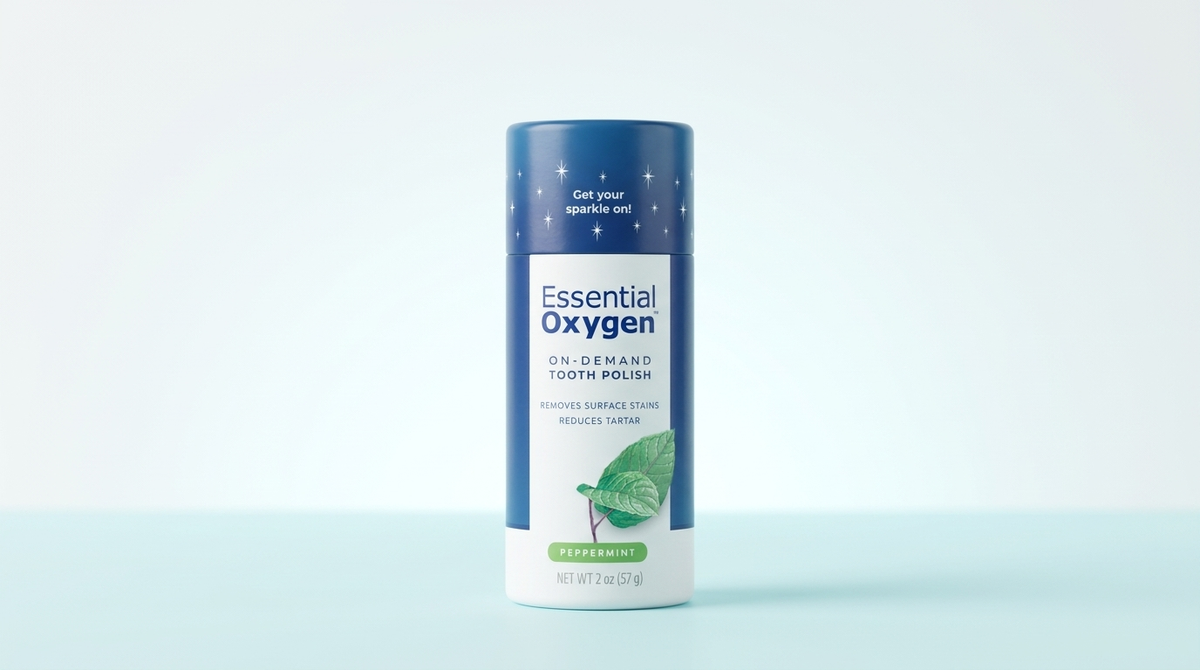
A Clinical Guide to Periodic Polishing, Extrinsic Stain Management & Complementary Low Abrasion Oral Care
Daily oral hygiene and periodic cosmetic polishing serve related but distinct purposes. A daily dentifrice should effectively support routine oral hygiene while limiting unnecessary abrasive exposure. Patients who accumulate persistent extrinsic stain, however, may periodically benefit from additional mechanical polishing beyond what an exceptionally low abrasion daily toothpaste is designed to provide.
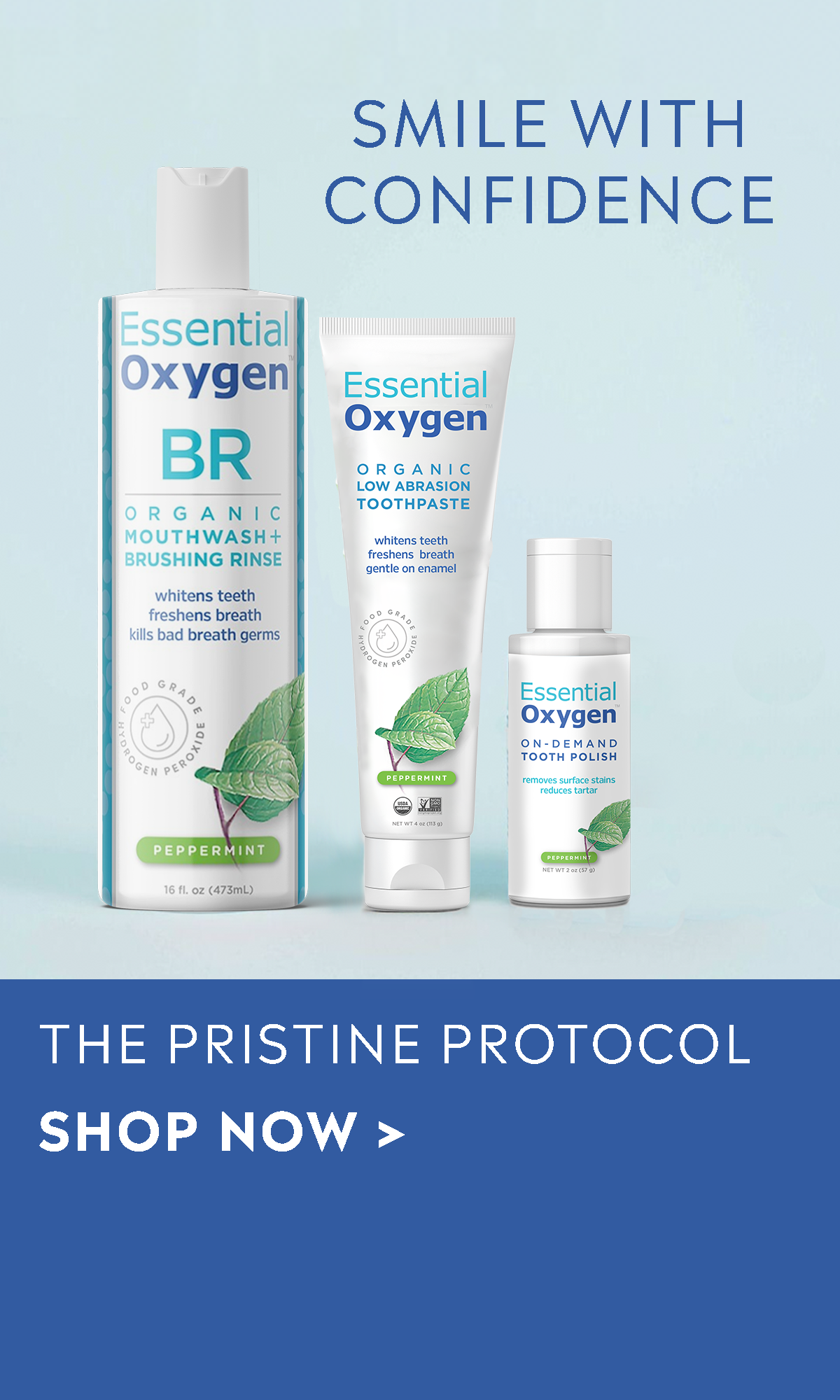
Essential Oxygen On-Demand Tooth Polish was developed around this distinction.
Rather than increasing the abrasivity of a toothpaste used twice every day, the On-Demand Tooth Polish provides a separate, adjustable mechanical polishing step that can be incorporated into a patient's home care routine based on individual stain accumulation, dietary habits, cosmetic goals, tooth structure, restorations, sensitivity, and clinician recommendation.
The mineral-based formulation combines calcium carbonate, calcium phosphate, and sodium bicarbonate with MSM and a multi-botanical essential oil system. Calcium carbonate provides mechanical polishing action, while sodium bicarbonate containing dentifrices have been clinically studied for extrinsic stain removal and plaque removal. Calcium phosphate contributes calcium and phosphate to the formulation's mineral system. Published research supports the ability of appropriately formulated abrasive systems to mechanically remove extrinsic surface stain, while sodium bicarbonate containing dentifrices have demonstrated stain removal efficacy in both clinical studies and literature reviews.
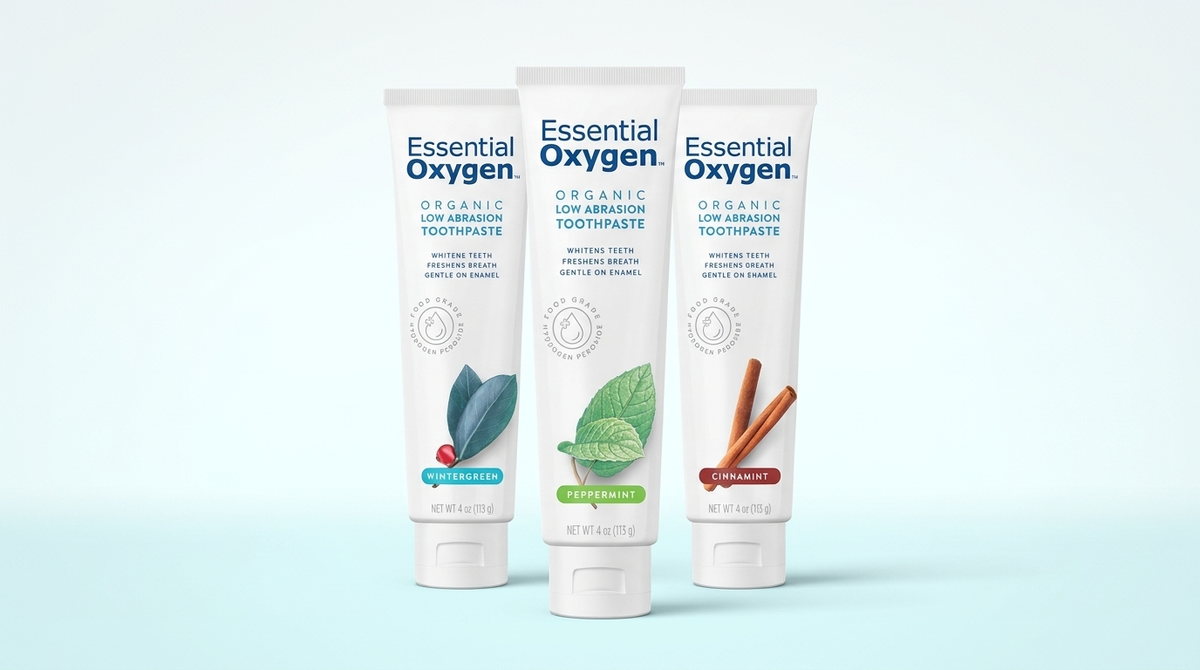
Essential Oxygen recommends pairing the On-Demand Tooth Polish with its Organic Low Abrasion Toothpaste (RDA 12). The toothpaste serves as the gentle, oxidation-based daily foundation, while the Tooth Polish can be used 3-7 times per week as an additional mechanical polishing step when desired.
This approach reflects a simple clinical philosophy:
1. The Role of Periodic Polishing in Daily Oral Care
Extrinsic tooth discoloration develops when chromogenic compounds accumulate on or interact with the acquired pellicle at the tooth surface. Coffee, tea, red wine, tobacco, certain foods, and other environmental exposures can contribute to visible staining over time.
There are two fundamentally different approaches to managing this type of discoloration:
Chemical stain modification, including oxidation with peroxide, and mechanical stain removal, in which polishing agents physically disrupt and remove surface deposits.
Mechanical stain removal is well established in oral care. Abrasives incorporated into dentifrices and prophylaxis products can remove extrinsic discoloration and produce a visible whitening effect without altering intrinsic tooth color.
The clinical question is therefore not whether mechanical polishing has value, but how frequently mechanical polishing is necessary for an individual patient.
A patient who accumulates significant coffee or tea stain may have different needs from a patient with exposed dentin, erosion, recession, extensive restorative dentistry, or little extrinsic discoloration.
Separating routine brushing from additional polishing allows those needs to be addressed independently.
2. Separating Daily Cleaning From Periodic Polishing
Essential Oxygen Organic Low Abrasion Toothpaste has an independently tested RDA of 12 and is designed for routine twice-daily brushing. Its 1.44% food grade hydrogen peroxide provides an oxidation-based approach to gradual extrinsic stain management while maintaining exceptionally low abrasivity.
The On-Demand Tooth Polish serves a different purpose.
Rather than increasing the abrasive load of the patient's daily toothpaste, the Tooth Polish provides an additional mechanical polishing step that can be introduced selectively.
This approach gives clinicians greater control over the balance between daily gentleness and periodic polishing performance.
3. The Science of Mechanical Stain Removal
Whitening dentifrices can improve tooth appearance through several mechanisms, but mechanical stain removal remains particularly important for extrinsic discoloration.
Abrasive particles interact with the tooth surface during brushing to disrupt and remove adherent surface deposits and chromogens. Their clinical performance depends not simply on the presence of an abrasive, but on multiple variables including particle characteristics, concentration, formulation, toothbrush, brushing pressure, and frequency of use.
Sodium bicarbonate is particularly well studied in this context. A review published in the Journal of the American Dental Association concluded that the available literature supports the effectiveness of baking soda containing dentifrices for stain removal and whitening. The review also noted that some baking soda dentifrices demonstrated greater stain removal than comparison dentifrices with higher overall abrasivity.
In a six week clinical trial involving adults with naturally acquired extrinsic stain, a sodium bicarbonate dentifrice containing calcium and phosphate produced statistically significant reductions in extrinsic tooth stain and outperformed the comparison dentifrice at later assessments.
Sodium bicarbonate dentifrices have also been evaluated for plaque removal. A systematic review found significantly greater plaque reduction in single-brushing studies compared with control dentifrices, although longer term findings were less consistent.
These findings support the broader formulation rationale behind using mineral and bicarbonate-based polishing systems as part of mechanical oral hygiene. They should not, however, be interpreted as product specific clinical efficacy data for Essential Oxygen On-Demand Tooth Polish.
4. Key Formulation Components & Clinical Relevance
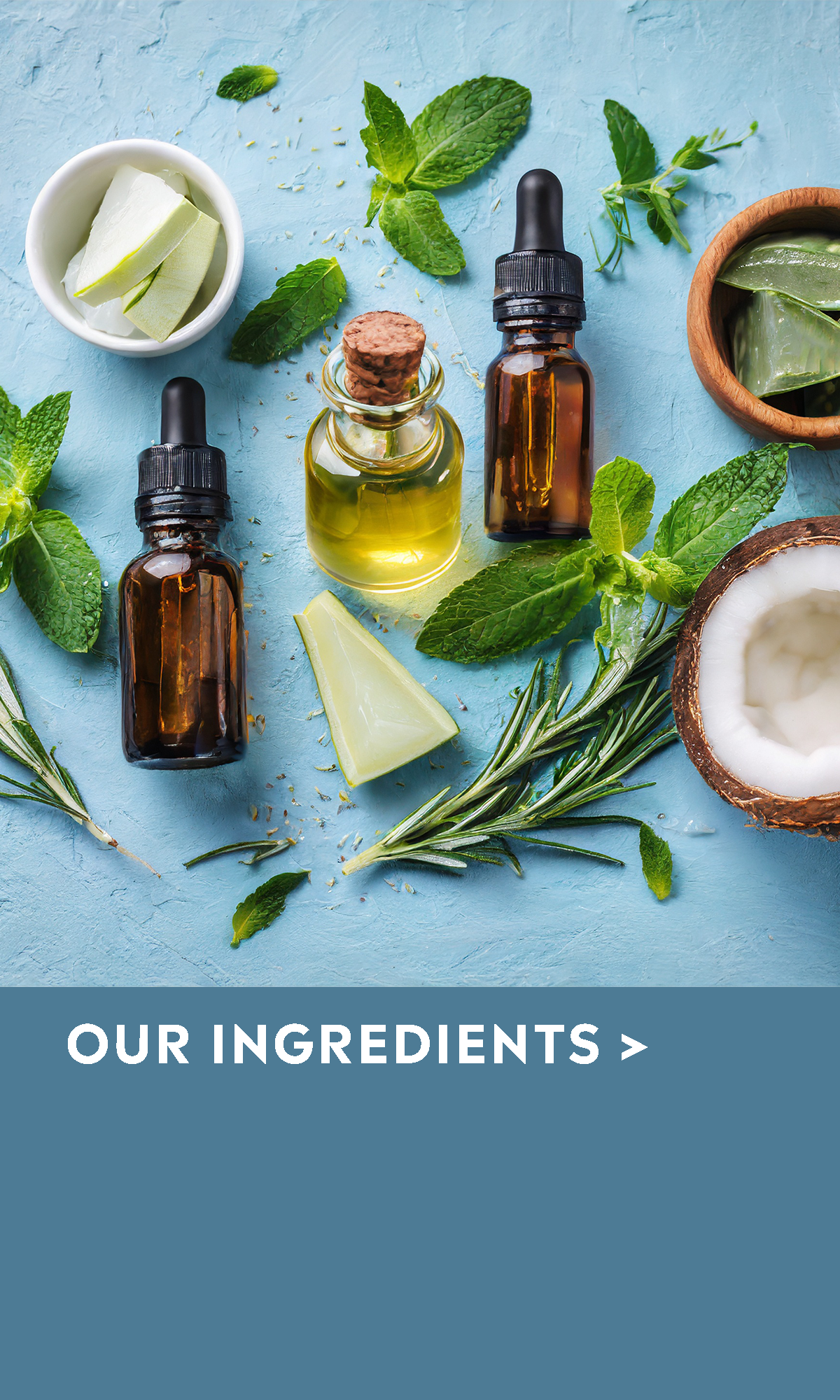
Essential Oxygen On-Demand Tooth Polish combines mineral-based polishing agents with MSM and a multi-botanical essential oil system to provide additional mechanical stain management and a clean, polished post-use experience.
Core Polishing & Mineral Components
| Ingredient | Clinical Relevance & Formulation Role |
|---|---|
| Calcium Carbonate | Mechanical Polishing. Functions as a mineral-based polishing agent that helps physically remove extrinsic surface stains and deposits, supporting a smooth, polished tooth surface. |
| Sodium Bicarbonate (Baking Soda) | Stain & Plaque Removal. Provides mechanical cleansing and polishing action. Sodium bicarbonate containing dentifrices have been clinically studied for extrinsic stain removal and plaque removal and can contribute to a clean, polished tooth surface. |
| Calcium Phosphate | Mineral Support. Provides calcium and phosphate, the mineral building blocks of tooth structure, and contributes to the mineral-based formulation. Calcium phosphate technologies have also been extensively investigated in oral care for their role in supporting the mineral environment of enamel. |
| MSM (Methylsulfonylmethane) | Formulation Support. A sulfur containing compound incorporated as part of the formulation's complementary ingredient system. Oral health specific clinical evidence for MSM in a tooth polishing application is limited; therefore, no independent therapeutic claim is made for this ingredient. |
Botanical Oral-Care System
| Ingredient | Clinical Relevance & Formulation Role |
|---|---|
| Organic Peppermint Oil (Mentha piperita) | Freshness & Patient Experience. Provides naturally occurring menthol and a cooling sensory effect that supports oral freshness, a clean mouth sensation, and a refreshing post polishing experience. |
| Organic Spearmint Oil (Mentha spicata) | Oral Freshness. Provides aromatic botanical compounds and a milder mint profile that complements peppermint while supporting a fresh, clean mouth experience. |
| Myrrh | Traditional Oral-Care Botanical. A botanical with a long history of use in oral care preparations that contributes aromatic compounds to the formulation's botanical system and supports a clean-mouth environment. |
| Organic Wintergreen Oil (Gaultheria procumbens) | Botanical & Sensory Support. A natural source of methyl salicylate that contributes to the formulation's botanical system while providing a distinctive cooling, freshening sensory experience. |
| Organic Eucalyptus Leaf Oil (Eucalyptus globulus) | Oral Cleanliness & Gingival Support. Provides naturally occurring eucalyptol and other botanical compounds associated with oral cleansing. Eucalyptol containing multi-essential oil oral care systems have been clinically studied for their adjunctive role in plaque control and gingival health. |
| Organic Rosemary Leaf Oil (Rosmarinus officinalis) | Botanical Oral-Health Support. Provides bioactive botanical compounds with potential oral health supporting properties; rosemary containing oral care formulations have been investigated for effects on plaque and gingival health. |
| Organic Clove Bud Oil (Eugenia caryophyllus) | Oral Comfort & Cleanliness. A natural source of eugenol with a long history of use in dentistry and oral care preparations; contributes to the formulation's soothing and freshening botanical profile. |
| Organic Cinnamon Leaf Oil (Cinnamomum zeylanicum) | Oral Freshness & Cleanliness. Provides aromatic botanical compounds traditionally incorporated into oral care formulations to support oral freshness and a clean mouth environment. |
| Organic Lemon Peel Oil (Citrus medica limonum) | Antioxidant & Freshness Support. Provides naturally occurring antioxidant and aromatic compounds that complement the botanical system while supporting oral freshness and a clean mouth environment. |
Formulation & Patient-Experience Support
| Ingredient | Clinical Relevance & Formulation Role |
|---|---|
| Organic Stevia | Palatability. Provides plant-derived sweetness without fermentable sugar, helping improve the sensory experience and acceptability of the formulation. |
About the Essential Oil System
Several constituents represented in the On-Demand Tooth Polish's botanical system overlap with compounds that have been studied in multi essential oil oral care formulations, particularly menthol, eucalyptol, and methyl salicylate. Clinical research on specific multi-essential-oil mouthrinse formulations has demonstrated adjunctive benefits for plaque control and gingival health when combined with mechanical oral hygiene.
5. Which Patients May Benefit Most?
On-Demand Tooth Polish may be particularly useful for patients who:
The appropriate frequency should be individualized. Patients with erosion, exposed dentin, recession, sensitivity, significant tooth wear, or extensive restorative dentistry may require modified recommendations or professional evaluation before incorporating additional polishing.
6. Setting Appropriate Patient Expectations
The distinction between extrinsic stain removal and intrinsic tooth whitening should be explained clearly.
The On-Demand Tooth Polish is intended to help mechanically remove surface stains and deposits. It does not bleach the internal tooth structure or change the underlying intrinsic color of dentin.
Patients with substantial intrinsic discoloration, developmental staining, medication related discoloration, or other internal color changes may require professional whitening or other cosmetic treatment.
Similarly, the Tooth Polish should not be represented as a method for removing established dental calculus. Although polishing may help remove soft deposits and surface stain, mineralized calculus requires professional assessment and removal.
7. Understanding Enamel Translucency After Stain Removal
Some patients may report that teeth appear more translucent, gray, or less uniformly opaque as accumulated surface stain is removed.
This observation should not automatically be interpreted as enamel loss.
Healthy enamel is naturally translucent. This is especially evident along the incisal edges of anterior teeth, where the optical characteristics of enamel and the relative contribution of underlying dentin create natural variations in color and translucency.
As extrinsic discoloration is removed, the patient's underlying tooth anatomy and natural optical characteristics may simply become more visible. Pre-existing enamel thinning associated with age, erosion, attrition, bruxism, dietary acid exposure, or previous abrasive wear may also become more noticeable once superficial staining is reduced.
For this reason, clinicians should evaluate persistent or increasing translucency rather than assuming that additional polishing is required.
If a patient presents with progressive translucency, sensitivity, visible erosion, recession, exposed dentin, or other structural changes, further clinical assessment is appropriate.
8. The Essential Oxygen Low Abrasion Stain Management Protocol
The On-Demand Tooth Polish is most clinically compelling when viewed not as a stand-alone whitening product, but as part of an individualized stain management strategy.
Together, the products allow the clinician to separate oxidation, routine daily brushing, and additional mechanical polishing rather than asking one highly abrasive dentifrice to perform every function twice each day.
9. Chairside Communication
"Your everyday toothpaste is intentionally very low in abrasion. The polish gives you an additional stain-removal step when you need it, rather than making every brushing more abrasive."
"The polish mechanically helps remove surface staining from things like coffee and tea. It works on stains at the surface, it isn't bleaching the internal color of your teeth."
"Use the polish three to seven times per week based on how quickly you accumulate surface stain and the frequency your dental professional recommends."
"As surface stain comes away, you may notice more of your tooth's natural color and translucency. If you notice increasing translucency or sensitivity, we should evaluate it rather than simply polishing more."
10. Clinical Pearls
11. Conclusion
Essential Oxygen On-Demand Tooth Polish is designed around a different approach to whitening maintenance: use an exceptionally gentle toothpaste for daily brushing and introduce additional mechanical polishing only when it is needed.
Calcium carbonate and sodium bicarbonate provide the formulation's principal mechanical polishing functions, while calcium phosphate contributes to its mineral system. MSM and a multi-botanical essential oil blend complete a formulation designed to provide a clean, smooth, polished post-use experience.
When paired with Essential Oxygen Organic Low Abrasion Toothpaste (RDA 12), the Tooth Polish enables clinicians to separate routine daily oral hygiene from periodic cosmetic stain management. Recommended use of 3-7 times per week can then be individualized according to the patient's stain accumulation, tooth structure, restorations, sensitivity, habits, and aesthetic goals.
This approach does not eliminate mechanical polishing. It places mechanical polishing where it belongs: as an adjustable component of an individualized oral care regimen rather than an unavoidable feature of every brushing.